Ball State’s Center for Historic Preservation Blends Student Learning With Community Revitalization
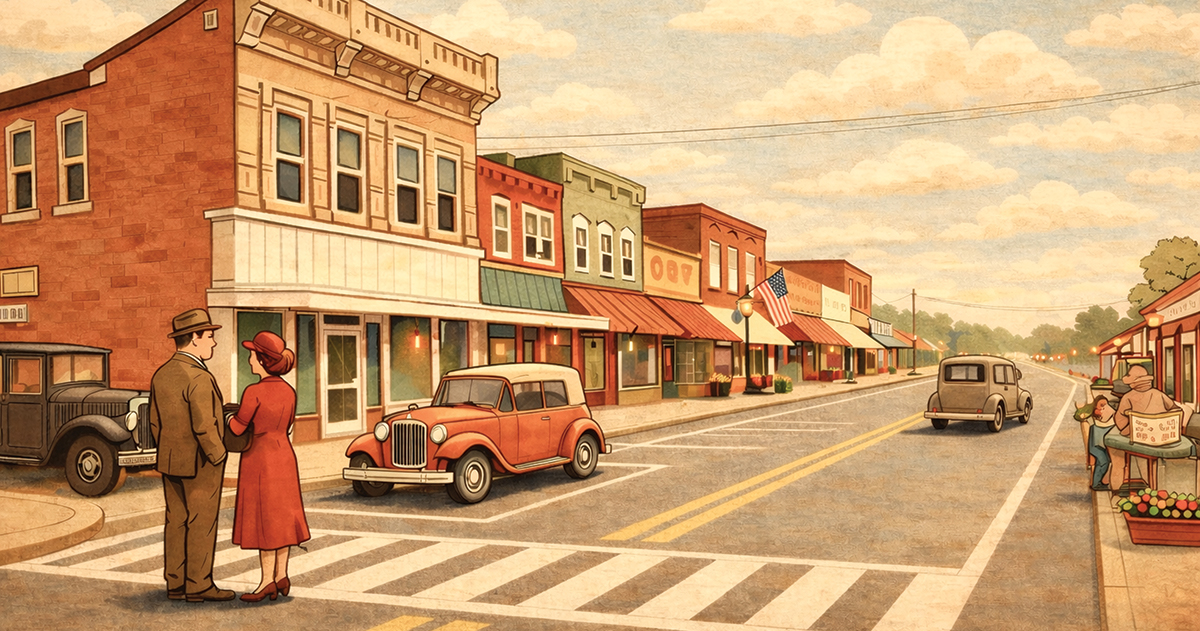
An illustration of historic downtown Sheridan, Ind., and a Ball State student façade recommendation highlight how thoughtful preservation can guide Main Street improvements—pairing research, local context, and best-practice design details to help property owners envision updates that respect the town’s character while supporting reinvestment and long-term vitality.
Ball State’s Center for Historic Preservation partners with communities across Indiana, giving students hands-on experience while helping towns protect historic character and plan for long-term revitalization.
In Sheridan, Ind., a row of 24 historic facades tells a new story—one of fresh paint, restored storefronts, renewed community pride, and a Main Street that connects the past to the future.
For more than three years, Ball State University’s Center for Historic Preservation (CHP) partnered with Sheridan leaders to imagine and implement Main Street improvements and strengthen the town’s legacy in ways that cultivate opportunities for prosperity. Sheridan is one of many communities across Indiana and beyond where CHP blends faculty expertise, student talent, and local vision to preserve history while shaping tomorrow.
“Our goal is always the same,” said J.P. Hall, ’09, director of CHP and associate professor of historic preservation at Ball State. “We want to help communities protect the character that makes them unique, while giving them practical tools to thrive in the future.”
 A statewide resource with national impact
Founded in 2004, the Center for Historic Preservation is part of the Estopinal College of Architecture and Planning. Its mission is to advance preservation education while providing professional-level design assistance to communities.
Projects range from historic district documentation and façade improvement plans to building condition assessments and public history initiatives. Through immersive learning, students work alongside faculty and community partners to develop design solutions grounded in best practices for historic preservation.
The Center’s portfolio includes work in more than 100 Indiana communities and in multiple states, making it a recognized leader in preservation-based community revitalization.
Partnerships with the Indiana Office of Community and Rural Affairs (OCRA) and Indiana Main Street have made CHP a go-to source for design and planning assistance statewide. Indiana Main Street is a network of passionate advocates, dedicated volunteers, influential stakeholders, and community organizers who encourage community-driven revitalization of downtown areas in Indiana cities and towns.
The ‘Sheridan Model’
Through its work in the community, Mr. Hall has established what he calls “The Sheridan Model,” a process to help towns preserve and revitalize their communities.
“We work with the Main Street organization, we work with property owners, and then we offer them design assistance. It’s a very engaged process,” Mr. Hall said. “We meet with them in person or on Zoom, and we’re very interested in what they want. We also propose our recommendations based on best preservation practices.”
Cindy Keever, president of Sheridan Main Street and a two-time graduate of Ball State University, knew her town could serve as a model for other communities.
“Sheridan, Ind., is a small town—not deep pockets, not deep resources,” she said.
Working with graduate students in the program provided Ms. Keever, ’72 MA ’93, and the building owners with added comfort.
“We came to understand these students’ level of expertise and understanding of the preservation and revitalization process,” she said. “It was a rich, evolving experience with total support and respect for what we needed.”
For students, the work is transformative, offering immersive learning opportunities that prepare them for fulfilling careers in preservation while leaving a lasting mark across Indiana and beyond.
Elizabeth Wickware, ’23 MS ’25, was one of the graduate students who spent countless hours helping revitalize the Sheridan community. While collaborating with three building owners, she developed a pattern book—a conceptual document for downtown and adjacent neighborhoods to recognize characteristics and how new development can work to preserve them—to give Sheridan its small-town charm.
“Being engaged in a real project has shown me the value of recognizing what I don’t know and being willing to ask people who do, and going into situations humbly and open to learning,” Ms. Wickware said. “I feel much more confident going into my career through these experiences.”
A significant learning experience
These projects are more than preservation plans—they’re immersive learning experiences that shape the next generation of professionals. For students in Ball State’s Master of Science in Historic Preservation program, CHP work delivers portfolio-ready designs, hands-on field experience, and a deep understanding of how preservation can drive community revitalization.
“These are real clients, real deadlines, and real communities,” Mr. Hall said. “Our students leave here knowing how to navigate the challenges of preservation work and how to make a tangible difference.”
Mr. Hall is himself a graduate of Ball State’s master’s program in historic preservation, making him a direct example of the program’s influence.
Faculty mentors like Mr. Hall ensure students gain experience presenting to stakeholders, responding to feedback, and tailoring design recommendations to each community’s needs. Many graduates go on to careers in preservation planning, architecture, cultural resource management, and related fields, often citing their CHP experience as the turning point in their professional preparation.
The work continues
From downtown revitalization in small towns to comprehensive preservation plans for historic districts, Ball State’s Center for Historic Preservation proves that protecting the past can be a powerful tool for shaping the future.
Back in Sheridan, the transformation is ongoing. As new projects take shape and community members gather along Main Street, the town’s historic buildings are no longer just remnants of the past—they’re cornerstones of what’s to come.
“When we do this work well, everyone benefits,” Mr. Hall said. “Communities get the tools they need to preserve what matters most to them, and our students leave with the skills and confidence to build fulfilling careers and meaningful lives that make a difference.”