Ball State’s Carnegie ‘Triple Crown’ Recognition Highlights Student Opportunity and Impact
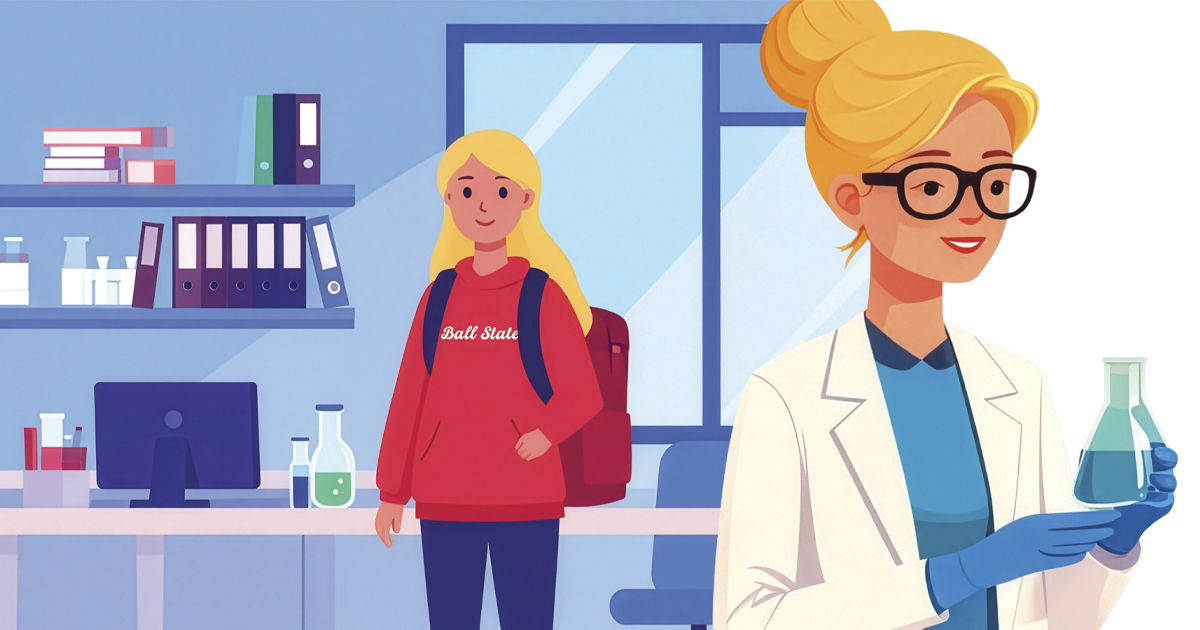
New Carnegie classifications recognize Ball State as an Opportunity College and University, an R2 research institution, and a national leader in community engagement.
In early 2025, the Carnegie Foundation for the Advancement of Teaching introduced a new national classification designed to answer a question many students and families are asking more urgently than ever: What is the real value of a college degree? Ball State University was named an Opportunity College and University, designated a Doctoral University with High Research Activity (R2), and earned the 2026 Carnegie Elective Classification for Community Engagement—one of just 11 institutions in the country, and the only one in Indiana, to hold Carnegie’s “Triple Crown” of classifications. Together, these recognitions reflect the University’s commitment to student success, academic excellence, and real-world impact.
The Opportunity College designation is grounded in two objective measures: whether an institution enrolls a student body that reflects the demographics of its state, and whether graduates, years after earning their degrees, earn at least 50 percent more than people without a college degree. The Community Engagement classification honors a deep, sustained commitment to reciprocal partnerships that strengthen communities and enhance student learning.
But recognition alone doesn’t tell the full story.
Behind every data point is a person. A student who took a chance. A mentor who noticed potential. A project that moved learning beyond the classroom. A journey when education became opportunity.
The following six narratives—stories of current students and recent graduates across disciplines—offer a clearer picture of what this recognition looks like in practice. Their paths are different, their goals distinct, but their experiences share a common thread: access to meaningful opportunities, support that meets them where they are, and an education that translates into purpose, impact, and possibility.
Together, their stories epitomize a designation—and show how opportunity becomes momentum.
50% more higher earnings than peers without college degrees within 10 years
Students translate classroom learning into meaningful community impact
94% Graduate placement rate-employment or pursuing further education
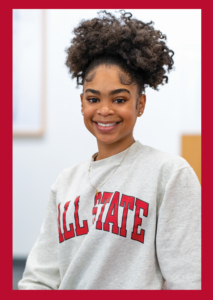 Kahmara Munn
Junior, media major | College of Communication, Information, and Media
I came to Ball State knowing I wanted to tell stories—but not fully realizing how quickly I’d be trusted to do that work for real.
I’m from Indianapolis, and I went to Cathedral High School, where I first discovered broadcasting through a live student show. I liked being on camera, but more than that, I liked asking questions. I’ve always been curious—about people, about what’s happening beneath the surface—and that curiosity is what pulled me toward journalism. When I first visited Ball State and stepped inside the Unified Media Lab, everything clicked. It felt like a place where I could belong and grow.
I didn’t ease into reporting here. I jumped in. I joined NewsLink Indiana my freshman year, and almost immediately, I was out in the field—setting up my own equipment, traveling around Muncie, interviewing people I’d never met, and figuring things out as I went. It was overwhelming at times, but I never felt alone. My peers, student leaders, and faculty supported me, even when the work pushed me far outside my comfort zone.
One of the most challenging, and affirming, moments for me came while covering a campus protest at Peace Plaza. Protests can be unpredictable, and as a Black woman reporting on sensitive issues, I had to stay aware of my surroundings while staying focused on the story. People were willing to talk, and they trusted me to tell their perspectives accurately. That responsibility mattered to me. It reminded me why I want to do this work: to give people space to be heard and to help others understand what’s really happening.
Ball State has also helped me grow beyond the newsroom. As president of Success in Sisterhood, I work to create safe spaces for women, especially women of color, to connect, support one another, and grow professionally and personally. As a first-generation college student, I know how intimidating higher education can feel. Being part of organizations like this has helped me find my voice and use it with purpose.
What Ball State has given me is confidence—confidence to walk into any room, whether it’s a community meeting or an interview with a public figure, and trust myself to do the work well. Faculty mentors like Michael Jefferson and Michael Brouder, MA ’16, along with my peers, have helped me think critically, ask better questions, and stay true to who I am as a reporter.
If I were talking to a high school student who’s curious about media but unsure of their path, I’d tell them this: at Ball State, you don’t wait years to get real experience. You start now. And if you’re willing to work hard, ask questions, and take the leap, this place will meet you with opportunity.
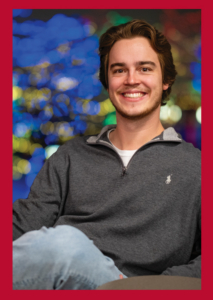 Cam West, ’22
Bachelor of Science, Computer Information Systems | Miller College of Business
I knew Ball State was the college for me because it was the right size, right price, and gave me that “away at college” experience while only being a couple of hours away from home.
When I got to Ball State, I started at the Miller College of Business with a pretty generic plan: business administration major, with a sales minor. This helped keep my options open since I knew I wanted something related to business.
Everything changed because of one class during my sophomore year. It was a computer information systems course with Dr. Fred Kitchens. It was the first time I saw how business and technology fit together. And I realized that’s exactly where I wanted to be. Not buried in code all day, but also not completely removed from how things actually work. I wanted to be the person in between, talking with clients and developers, making sure everyone’s on the same page.
So, I switched to computer information systems as my major. It felt like a risk at the time because I didn’t know much about the field, but the more I learned, the more I knew it was a good fit for me.
Fast forward to today, I’m a business analyst at Accutech Systems, working on their flagship software program, Cheetah. I work with clients, gathering requirements for their custom projects, and then communicate those requirements back to our development team so they can build it in Cheetah.
Ball State prepared me for a meaningful career after graduation. My capstone course was an immersive learning project that lasted a full year, working with the Indianapolis International Airport as our client. I was the project manager, which helped me learn how to lead a team, communicate with stakeholders, and handle obstacles when they didn’t go according to plan. That experience was instrumental in helping prepare me for my career.
Joining advisory boards and student organizations helped me build a network of people. When a position opened at Accutech Systems, someone I knew from my network reached out and said I’d be a good fit. The job posting asked for more experience than I had in that field, but my employer saw the experience Ball State gave me and decided to hire me.
If you’re in high school right now trying to figure out where to go or what to study, here’s my advice: you don’t need to have it all mapped out. You just have to be willing to get uncomfortable. Start by doing a campus visit; ask lots of questions; and understand all the options that are available. It’s the only way to truly find what fits you.
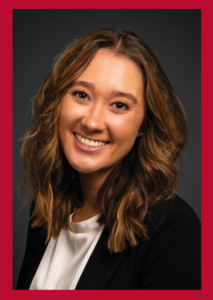 Sunnie Berning, ’23
Bachelor of Fine Arts, Visual Communications | College of Fine Arts
I didn’t come to Ball State knowing exactly what I wanted to do. I’m from Evansville, Ind., and like a lot of students—especially first-generation students—I knew college was important, but I didn’t yet have a clear picture of what my future looked like.
Ball State was actually the first campus I ever visited. I visited again my senior year of high school just to be sure, but I kept comparing every other school back to it. Something about the campus felt right—even though it rained or snowed both times I visited. I decided to power through that omen, and it turned out to be one of the best decisions I’ve made.
I started college thinking about science education and art, but I hadn’t found the right fit. Then, during an Art 100 class, Professor Shantanu Suman came in to talk about visual communication. I remember thinking, “Why is this not my major?” I switched immediately—and then, almost right after, we were sent home for COVID-19. It was a stressful time to change direction, but the grace I was given from advisors and faculty made all the difference. They didn’t treat the switch like a setback. They treated it like part of the process.
At Ball State, I said yes to a lot of opportunities—sometimes more than I probably should have. I was involved with Studio 165+, worked as a graphic design intern with the Ball State University Foundation, served as chair of One Ball State Day, and held leadership roles in student organizations. It was exhausting at times, but it taught me how to collaborate, manage deadlines, take feedback, and lead teams—skills I use every day now.
After graduating, I moved to Charlotte, N.C., without a full-time job lined up. That might sound scary, but Ball State had given me the confidence to trust myself. I freelanced, kept applying, and eventually landed a role as an associate web designer at carbonhouse. Today, I design websites for arenas, theaters, and stadiums all over the world. My job is hybrid, collaborative, and fast-paced—and it mirrors the way I learned to work in college.
I still stay connected to Ball State through the One Creative Mentorship Program, where I mentor current students. Giving back my time feels just as meaningful as anything else I could do.
If I could give advice to a high school student who feels unsure the way I once did, it would be this: say yes. Ball State is a place where you can explore, change your mind, and grow into who you’re meant to be. And if, by the time you graduate, you feel ready to move on—that’s
how you know you made the most of it.
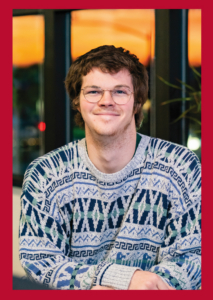 Trey Koch, ’24
Bachelor of Science, Psychology | Graduate student, Applied Behavior Analysis | College of Sciences and Humanities and Teachers College
I almost didn’t stay at Ball State.
I started college in the Fall of 2020, right in the middle of the COVID-19 pandemic. Classes looked different, campus felt quieter than I expected, and after my first semester, I genuinely considered transferring. I wasn’t sure yet who I was or what I wanted my future to look like. What ultimately kept me in Muncie wasn’t a single class or career plan—it was people. Specifically, it was the Ball State Ultimate Frisbee team.
Joining the Wizardz gave me a sense of belonging when I needed it most. Through that team, I found community, structure, and a reason to stay engaged at a time when everything else felt uncertain. I played all four years, eventually competing at the professional level, and today I’m proud to be back as the team’s head coach—still connected to the University that gave me my start in the sport.
Academically, I earned my bachelor’s degree in psychology in 2024, and along the way, Ball State opened doors I never would have known to knock on. Through an internship connected to the University, I began working at a local autism center. From day one, I knew I had found something meaningful. The combination of research, direct impact, and human connection felt right. That experience ultimately led me to pursue a master’s degree in applied behavior analysis, where I’m now completing my graduate studies with an assistantship that made continuing my education financially possible.
Faculty mentorship played a critical role in that journey. Professors like Dr. Daniele Nardi encouraged me to explore research deeply as an undergraduate, while my graduate assistantship supervisor, Dr. Shannon Dieringer, helped me learn how to balance academic rigor with real-world responsibility. Those relationships taught me how to communicate clearly, meet people where they are, and apply evidence-based practices in ways that truly help families and clients.
Outside the classroom, Ball State also shaped my life in unexpected ways. I met my partner, Maddy Fenton, ’23, a Ball State alum working in social work, and together we’ve built a shared commitment to service and community that grew directly from our time on campus.
If I could offer advice to a high school student standing where I once stood, unsure whether to commit, I’d say this: choose something you can care about even on your hardest days. Ball State gave me space to figure that out—and the support to turn uncertainty into opportunity.
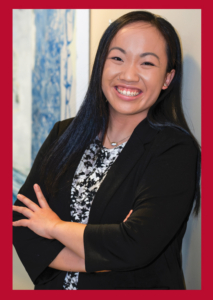 Anne Mei McClain, ’22 MA ’24
Bachelor of Science and Master of Arts, Speech Language Pathology | College of Health
I grew up in Muncie, in the Delta High School district, so Ball State always felt close to home. Campus was part of my life long before I became a student—dance recitals at Emens, trips through campus with my family, and a sense that this place already felt familiar. When it came time to choose a college, staying close to home wasn’t about convenience. It was about opportunity.
I knew early on that I wanted to pursue speech-language pathology. I was internationally adopted from China as an infant and experienced early language delays myself, so speech therapy was part of my own story. That personal connection, combined with my love of working with people, especially children, made the field feel like a natural fit. Ball State stood out because it offered both a strong undergraduate foundation and a nationally respected graduate program in speech-language pathology. I didn’t need to leave my community to receive an exceptional education.
What I didn’t expect was how quickly Ball State would move me from student to clinician. As an undergraduate, I was already gaining hands-on experience through immersive learning courses that connected classroom learning with real needs in the Muncie community. I worked on early language and literacy initiatives, collaborated with community partners, and learned how research, service, and practice intersect. Those experiences helped me see speech-language pathology not just as a job, but to make a meaningful difference.
Graduate school accelerated that growth. Ball State’s on-campus clinics and off-campus externships gave me direct experience with patients across the lifespan—children, adults, and medically complex populations. I entered the workforce having already assessed clients, developed treatment plans, collaborated with interdisciplinary teams, and worked under licensed supervisors. That preparation made the transition to professional practice feel natural rather than overwhelming.
Today, I work as a speech-language pathologist with Community Health Network, primarily in acute care. I see infants in the NICU, adults recovering from strokes, and patients navigating swallowing, communication, and cognitive challenges. Every day, I draw on the clinical training, critical thinking, and collaboration skills I developed at Ball State.
For students considering Ball State, especially those from nearby communities like mine, my advice is simple: take advantage of what’s here. Say yes to opportunities, get involved early, and don’t underestimate how powerful hands-on learning can be. Ball State didn’t just prepare me for a career. It helped me discover the kind of professional—and person—I wanted to be.
Mitchell Giesting, ’25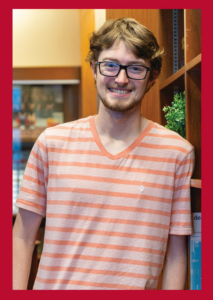
Bachelor of Urban Planning | Estopinal College of Architecture and Planning
I’ve always been fascinated by cities—how they grow, how people move through them, and how decisions made on paper shape real lives. Growing up in Fishers, Ind., I spent a lot of time visiting places like Chicago, taking in the grid, the buildings, the transit systems. I didn’t know it at the time, but those trips planted the seed for what would become my career.
By high school, I realized urban planning was more than an interest—it was a profession. When I started researching programs, Ball State stood out immediately. Its Estopinal College of Architecture and Planning is nationally recognized, and I knew I wanted a program that didn’t just talk about cities, but actively worked in them. That’s exactly what I found in Muncie.
At Ball State, learning never stayed in the classroom. Through studio courses and immersive projects, I was working with real data, real neighborhoods, and real stakeholders early on. One of the most meaningful experiences came during a third-year studio project partnering with the Muncie Land Bank. My classmates and I collected housing condition data in Muncie’s Old West End and Industry neighborhoods, mapped it using GIS, and helped identify where reinvestment could make the biggest difference. Seeing that work later inform millions of dollars in grants and redevelopment funding was eye-opening. It showed me that research, done well, can lead directly to change.
Faculty members pushed us to think beyond theory and ask harder questions. They encouraged us to be curious, to challenge assumptions, and to connect our work to broader systems. That mindset followed me into internships with the City of Fishers, where I learned how planning functions inside local government—balancing vision, bureaucracy, and public input. Those experiences taught me things textbooks couldn’t.
This past Fall, I graduated with honors from Ball State—and stepped directly into a full-time role as a Planner I with the Town of Brownsburg. Making that transition so quickly feels surreal, especially in a tough job market. But I know how much my education prepared me for this moment. A Ball State planning degree carries weight because it represents real experience, applied research, and the ability to think critically about communities.
For students considering Ball State, my advice is simple: lean into what excites you. Reach out to people. Ask questions. Don’t be afraid to dream big. The opportunities here are real—but you have to take them. If you do, Ball State will meet you there.