Helping Shape A Lifeline for Children
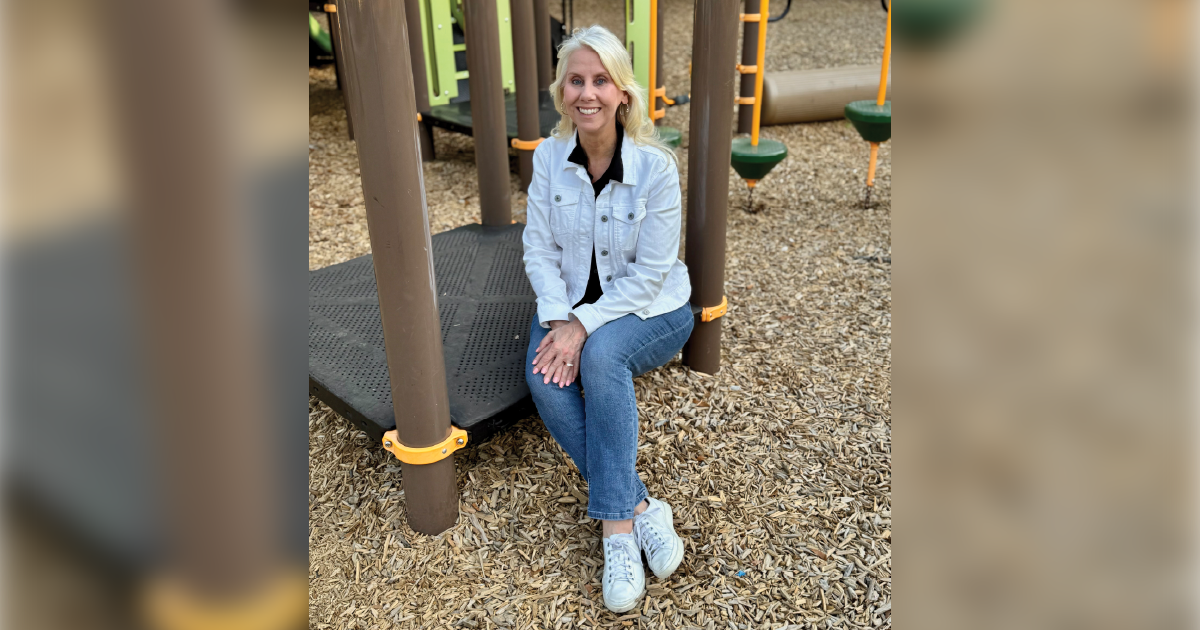
Carolyn Alvey helped develop the framework for what became the AMBER Alert system, which has aided authorities in the rescue and recovery of more than 1,500 missing children in America over the last 30 years.
Journalism alumna Carolyn Alvey, ’87, reflects on the Ball State relationships and communications career that led her to help develop the framework for the AMBER Alert system 30 years ago.
Carolyn Alvey, ’87, never imagined that a move to Texas, a career in communications, and a network of Ball State University relationships would help place her in the middle of a public safety effort that would aid authorities in the rescue and recovery of more than 1,500 missing children in America over three decades.
Ms. Alvey, now president of Aardvark Communications in Texas, was working with the Association of Radio Managers in Dallas-Fort Worth in 1996, supporting the organization through public relations and promotion of the radio industry. That same year, 9-year-old Amber Hagerman of Arlington, Texas, was abducted and murdered.
A local radio listener soon asked whether broadcasters could help alert communities during child abductions. The idea quickly gained traction, and Ms. Alvey volunteered to help make that happen.
Working alongside radio industry professionals and the Dallas Police Department, she helped develop the framework for what became the AMBER Alert system. She also advocated naming the system after Amber Hagerman, receiving permission from her mother before the name was adopted.
“Every time I hear the alert, I think of Amber,” Ms. Alvey said. “I think about her life, her family, and the fact that her case remains unsolved. But I also believe her legacy lives on through the lives saved.”
Ms. Alvey said the path to that work began, in part, at Ball State, where she earned her bachelor’s degree in journalism from the College of Communication, Information, and Media.
“The relationships I built at Ball State—with friends, mentors, my sorority sisters, and fellow alumni—played a direct part in my career path, including my involvement with the AMBER Alert,” she explained. “Ball State connections helped me move to Texas, find opportunities, and ultimately connect with the people who led me to this work.”
For Ms. Alvey, the system’s legacy has never been about personal recognition. It has always been about the child whose name it carries—and the children it has helped bring home.
“It’s never been about me,” Ms. Alvey said. “It’s about Amber, her family, and protecting children.”
AMBER Alert System
As of Dec. 18, 2025, 1,292 children were successfully recovered through the AMBER Alert system, and 241 children were rescued because of wireless emergency alerts. AMBER Alerts are distributed through radio, television, highway signs, and mobile devices.
— Source: U.S. Department of Justice