Ball State Marks 100 Years of Student Healthcare and 75 Years of Counseling
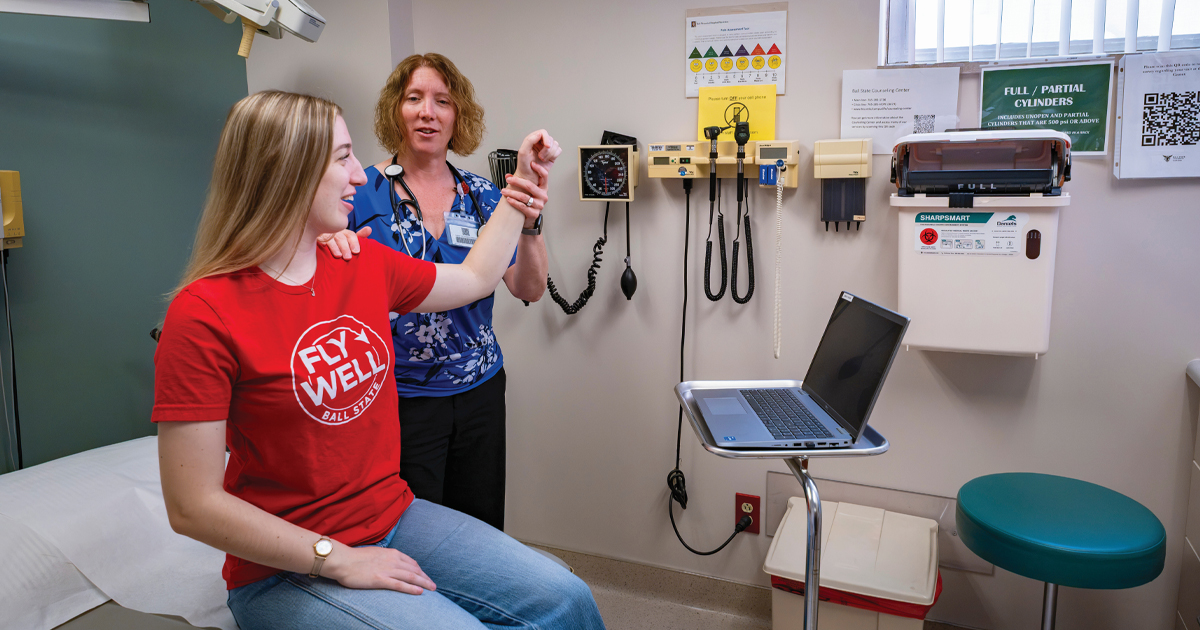
A century of student healthcare and 75 years of counseling services reflect Ball State’s evolving commitment to supporting student health, wellness, and success.
For generations of Ball State University students, care on campus has taken many forms: a physician’s exam, a night in the infirmary, a confidential conversation, a prescription, an urgent appointment, or help finding the next step forward.
In 2026, the University is recognizing two milestones in that history—100 years of organized student healthcare and the 75th anniversary of the Counseling Center.
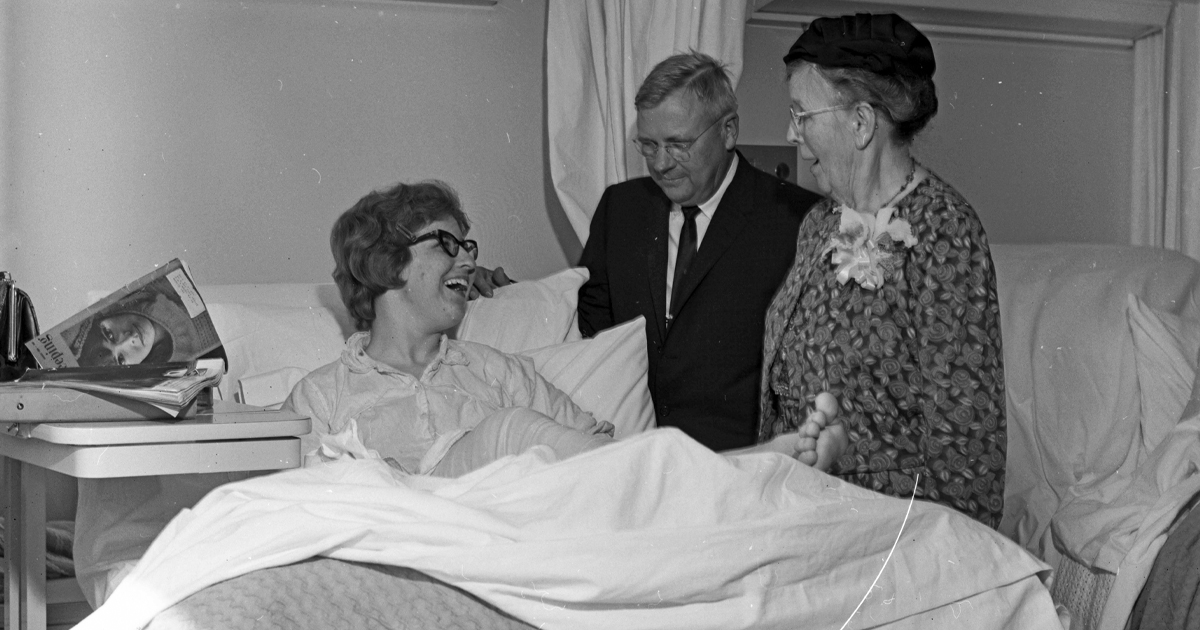
Dr. Amelia T. Wood and Dr. Wayne Pippenger visit a patient during the February 1964 dedication of the Wood Health Center (left). Dr. Pippenger served as director of student health from 1955–72.
Health Services
In 1925, Ball State began offering student health services in the new Ball Gymnasium. Board of Trustees records show that 1926 marked the emergence of a distinct Health Department, supported by a school physician, dedicated staff and supplies, and revenue from student health fees.
The operation continued to grow, and in 1930, Dr. Amelia T. Wood was named director of health service. Over the next 25 years, she established a program that included physical examinations for new students and employees who worked in cafeterias. She also established a program of health education in the classroom.
A new Student Health Center bearing her name was dedicated Feb. 29, 1964. The purpose-built facility included medical offices and a 40-bed infirmary, reflecting an era when campus healthcare included outpatient treatment and overnight stays.
By the 1970s, the Health Center provided routine and emergency care, health education, pharmacy services, physical therapy, disease prevention, and around-the-clock nursing coverage. It later transitioned toward the outpatient care, education, prevention, and wellness services familiar to students today.
Counseling
Ball State’s counseling services followed a similar evolution. Testing, guidance, and advising existed earlier, but the Counseling and Testing Center became a separately organized and funded University function in 1951.
Dr. Merrill C. “Jack” Beyerl joined Ball State in 1953 and began devoting 25 percent of his time to providing counseling at the Center. He was later credited by the Board with shaping the development of the Counseling Center. The Counseling and Testing Center developed into Counseling and Psychological Services, expanding into personal counseling, psychological assessment, crisis response, outreach, research, and graduate training.
Today, counseling services include individual and group therapy, crisis care, outreach, self-help resources, and telehealth. Psychiatric services are available through the Student Health Center.
“For generations, Ball State’s health and counseling professionals have adapted their services to meet students’ changing needs,” said Dr. Ro-Anne Royer Engle, ’18 EdD ’25, vice president for student affairs. “What has remained constant is their commitment to helping students feel supported, stay well, and be ready to succeed in and beyond the classroom.”