How Ball State Shaped Eric Foss—and Inspired His Investment in Student-Athletes
 From small-town Indiana to the highest levels of corporate leadership, Eric Foss, ’80, carried lessons about people, perseverance, and potential. Now, his family is helping a new generation of Ball State student-athletes discover what they can become.
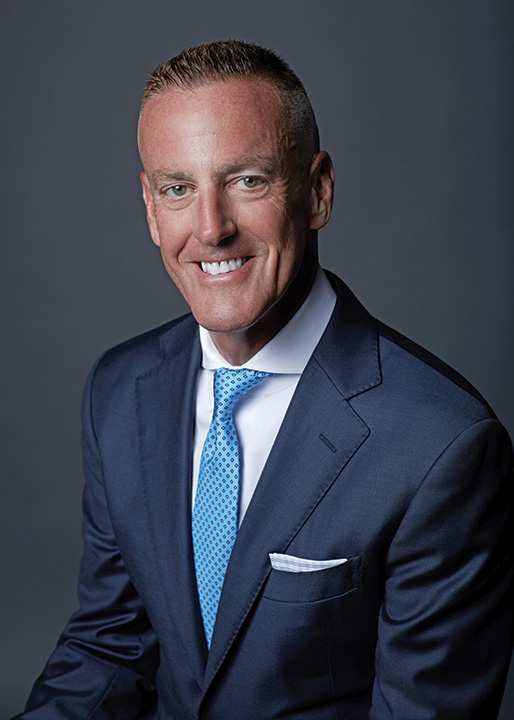
When Eric Foss, ’80, returns to Ball State University during Homecoming Week, the opening of the performance center bearing his name will bring his family’s connection to the University full circle.
He expects the moment to be emotional.
It will take him back to arriving on campus as an 18-year-old, uncertain where college might lead. It will remind him of his parents—hardworking educators and Ball State graduates—and the Summers he spent with them in Muncie long before enrolling himself.
But for Mr. Foss, the Eric Foss Championship Performance Center is ultimately less about looking back than about what happens next.
“Hopefully, the student-athletes who are there to use it—on a day when they think they have nothing left—will do five more reps,” he said, “and find a way to get more out of themselves than they thought possible.”
That possibility—helping people recognize and reach their potential—connects the many chapters of Mr. Foss’ life.
Lessons From Lowell
Mr. Foss grew up in Lowell, Ind., a small farming community where reputations traveled quickly and young people were rarely anonymous.
His parents, Jack, MA ’64, and Barbara, ’57 MAE ’73, were educators. His father was an elementary school principal; his mother taught high school English. Both emphasized faith, family, honesty, and hard work with Eric and his sister, Shari, ’84.
One lesson arrived after Mr. Foss came home past curfew late on a Friday night in high school. He awoke Saturday believing he had escaped notice.
His father met him in the kitchen.
“What happened last night is not a secret,” he told him. “If I know about it, so do others.”
Mr. Foss was an athlete, a Summer park counselor, and a familiar figure to younger children in the community. His father wanted him to understand that people were watching—and that his decisions affected more than himself.
“He said, ‘When it comes to your reputation, Eric, nurture it and protect it, because someday you might actually need it,’” Mr. Foss recalled.
The advice stayed with him through increasingly public leadership roles.
Athletics provided another formative lesson. Mr. Foss played baseball, basketball, and golf growing up and remains an avid runner. In Lowell, Indiana high school basketball carried immense meaning for players, schools, and entire communities. A tournament loss was rarely felt by the team alone.
Mr. Foss still remembers his final basketball game, when the starters were removed with the outcome no longer in doubt. Looking into the stands, he saw disappointed classmates, cheerleaders, families, and community members who had invested emotionally in the season.
“I made a mental note that I never, ever wanted to let family, friends, or work colleagues down again,” he said. “That level of responsibility and accountability was something I learned in basketball and carry with me to this day.”
Finding His Direction at Ball State
 Mr. Foss knew Ball State before he became a student.
His parents spent Summers on campus pursuing advanced degrees, often bringing Eric and Shari with them. He became familiar with the students, faculty, facilities, and rhythms of University life.
When it was time to choose a college, Ball State offered the right balance.
“It came down to fit—both the size and the setting,” Mr. Foss said. “It felt like a medium-sized university but, most importantly, almost a smaller family environment.”
He did not arrive with a settled career plan. As the son of two educators, he first considered becoming a teacher and coach. With guidance from his father, he tried accounting before realizing it was not the right match.
He eventually landed in marketing.
That decision introduced him to the work that would shape his career: understanding people, identifying what they value, and creating something that meets their needs.
“If you’re in a consumer-driven industry, it’s really about people,” Mr. Foss said. “It’s about focusing on the marketplace and letting the marketplace set the table.”
Ball State also offered humbling lessons. He earned a D in astronomy during his first semester—an experience he can laugh about now—and learned as much from friendships and life outside the classroom as he did from coursework.
“The experience, the friendships, and the lessons stayed with me,” he said. “I owe a lot to Ball State.”
From the Route Truck to the Boardroom
During college Summers, Mr. Foss worked at Pepsi-Cola General Bottlers in Munster, Ind. He rode delivery trucks, stocked products, built store displays, and spent time inside the company’s offices and manufacturing operation.
He did not yet realize how important that ground-level education would become.
One morning, while sitting in a plant at about 5:30 a.m. as trucks prepared to leave, he watched a disagreement develop among employees. The facility’s general manager walked over, settled the dispute, put an arm around one of the employees, and told him how much he was valued.
As the manager walked away, he stopped in front of the college intern.
“Don’t forget one thing,” he told Mr. Foss. “You’re in the people business.”
Mr. Foss never did.
He joined Pepsi-Cola in Austin, Texas, in 1982 and rose through a succession of sales, marketing, operations, and executive roles. He eventually became chairman and CEO of Pepsi Bottling Group, overseeing a global organization with approximately 100,000 employees.
Later, he became president and CEO—and ultimately chairman and CEO—of Aramark, whose workforce numbered about 270,000. Today he serves as executive chairman and CEO of Primo Brands Corporation.
Even while leading global companies, he tried to retain the perspective gained on route trucks and factory floors.
“In a business where people are making, moving, selling, and delivering, you keep them at the forefront of your decision-making matrix—no matter what level you are in the organization,” he said.
His rise was not free of mistakes.
After moving from field operations into a strategy role at Pepsi, Mr. Foss and his team pursued an opportunity near grocery-store express lanes. They designed open-air coolers intended to capture convenient, high-margin sales from shoppers leaving the store.
The concept was sound. The execution was not.
The coolers failed to keep products cold enough and required customers to bend over and reach into what resembled a large wash tub. Retailers soon wanted them removed. Pepsi absorbed a multimillion-dollar write-off.
Mr. Foss was convinced he would be fired.
Instead, he was promoted.
The company recognized that the underlying insight was correct, even though the first design had failed. The enclosed coolers now found throughout checkout areas grew from that early attempt and eventually generated significant sales across the beverage industry.
“You have to be willing in life to place bets and take risks,” Mr. Foss said. “He who makes no mistakes makes no progress.”
The experience shaped how he later led teams. Progress, he believed, required an environment in which people could pursue ambitious ideas, learn from imperfect execution, and try again.
Where Sports, Higher Education, and Business Meet
Sports and higher education remained important throughout Mr. Foss’ career and family life. His wife, Kim, was a collegiate softball player at Georgia Southern University. Mr. Foss’ daughters—Laura, Elizabeth, and Kathryn—graduated from Texas A&M University, where the family has remained closely involved with Aggie athletics.
The family’s philanthropic priorities center on education, health and wellness, and assistance for people facing hardship.
Mr. Foss also found an opportunity to unite his interests in athletics and business through the Omaha Storm Chasers, the Triple-A affiliate of the Kansas City Royals.
He joined an ownership group that purchased the franchise and remained involved for more than a decade. To him, Minor League Baseball offered what he described as a master class in business.
Success required more than winning games. The organization competed for families’ entertainment dollars through ticket sales, concessions, merchandise, parking, sponsorships, and the overall ballpark experience.
“You have to roll up your sleeves and go make it happen,” he said.
The Storm Chasers achieved success on the field, winning multiple league titles. Mr. Foss also saw the organization fulfill its player-development mission: 14 members of the Royals’ 2015 World Series championship roster had previously played in Omaha.
The experience reinforced a belief he had carried since Lowell: talent matters, but development depends on preparation, culture, resources, and the people surrounding an individual.
An Investment in Potential
As Mr. Foss began discussing ways to support Ball State, the championship performance center emerged as a natural fit.
It aligned with the Foss Family Foundation’s interests in education, health, and wellness. It reflected his lifelong relationship with athletics. And it offered an opportunity to support the University that influenced multiple generations of his family.
Mr. Foss and Kim became the lead donors for the project, with their daughters and extended family involved through their family foundation.
“This was a way for me to go back and help the University, but also help student-athletes reach their full potential,” Mr. Foss said. “It created a partnership between our family and Ball State’s leadership.”
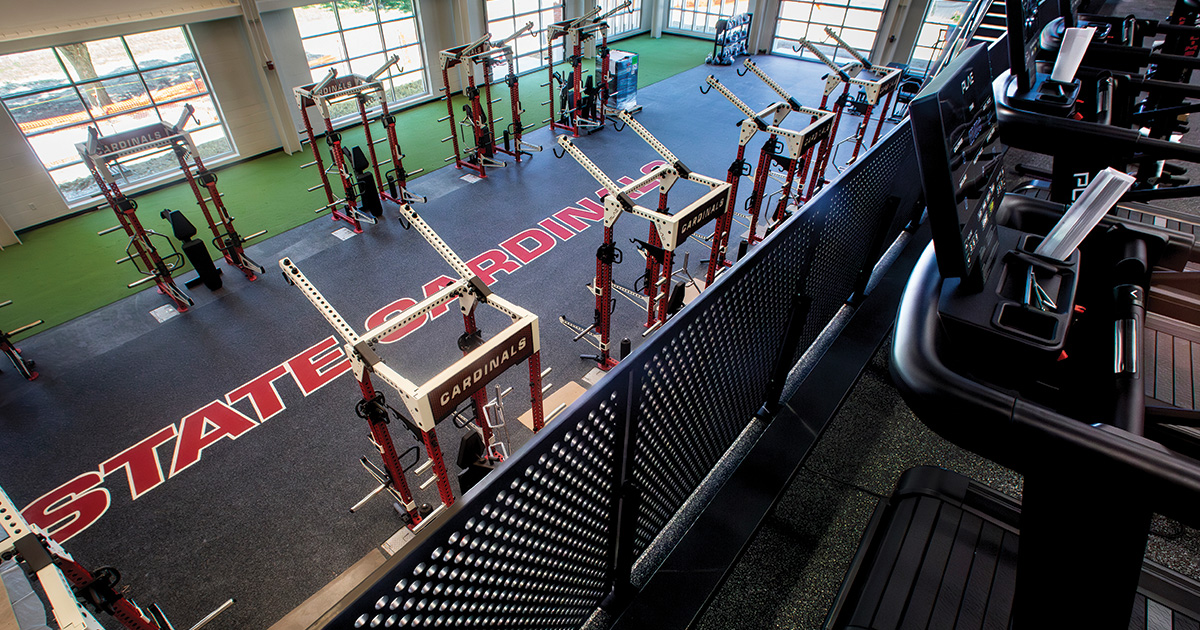
Connected to Worthen Arena and the Dr. Don Shondell Practice Center, the roughly 11,000-square-foot Eric Foss Championship Performance Center will serve more than 350 student-athletes across 18 varsity programs. Football will continue using its own strength and conditioning facility.
The new center will include strength, conditioning, and performance areas; cardio and recovery spaces; offices; a nutrition bar; and access to an outdoor synthetic-turf training area. It will give teams greater flexibility in scheduling workouts while supporting recruitment, retention, and daily athlete development.
“This is about trying to help somebody reach their full potential—not just in athletics, but in life,” Mr. Foss said. “It’s a little bit about doing better on the field or court, but, most importantly, hopefully it helps shape them as people and future leaders, just like Ball State did for me.”
Director of Athletics Jeff Mitchell said the center reflects both that vision and the Foss family’s belief in Ball State’s student-athletes.
“Eric understands that meaningful development requires more than talent,” Mr. Mitchell said. “It takes preparation, discipline, and the right environment. His family’s support will give our student-athletes a place designed around those needs—and a daily reminder that someone believes in what they can become.”
Returning to His Roots
Mr. Foss’ renewed relationship with Ball State extends beyond the building.
As a member of the Ball State University Foundation Board of Directors, he contributes his time and leadership experience to an organization focused on securing resources for students and faculty.
The role has given him an opportunity to return to his roots while working alongside people united by a shared purpose.
For Mr. Foss, his Foundation service and the performance center are interconnected. Both are expressions of leadership and stewardship—and of a debt he feels to the University.
When the center opens, he will think about his parents. His father, Jack, passed away in 2018, but Mr. Foss believes his father will be “watching with pride from above.” He will also think about his mother, Barbara; his sister, Shari, and her husband, Thomas; and the family members who helped make the project possible.
He will remember those childhood Summers on campus and the young student who once earned a D in astronomy while trying to determine his future.
Then he will look toward the student-athletes for whom the building was created.
“This investment is about today and the future,” Mr. Foss said. “Hopefully, something they do inside that championship performance center goes on to shape their legacy—and how they think about life after their degree at Ball State.”